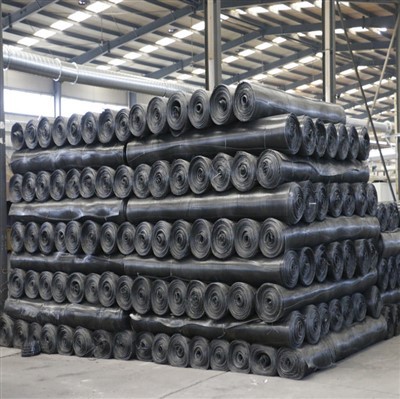
If you’ve ever stood at the top of a steep slope holding back a pile of loose soil, or driven down a residential driveway that cracked after a single winter of heavy snow, you’ve probably seen soil stability issues at work—even if you didn’t name them as such. For decades, engineers and contractors have relied on a quiet workhorse to fix these problems: biaxial geogrids. As a supplier who’s worked with these materials for years, I’ve seen firsthand how they turn unstable, fragmented soil into something strong enough to support roadbeds, hold cliffs in place, and keep gravel from washing away. Today, I want to break down exactly how biaxial geogrids impact soil stability, share real-world examples of their effectiveness, and point you to the specific products we offer that are tailored for common stability projects.
First, let’s get clear on what biaxial geogrids are, because that’s foundational to understanding their impact. Unlike uniaxial geogrids, which only strengthen soil in one direction, biaxial geogrids have uniform, interlocking apertures (holes) that stretch evenly across both the machine and cross-machine directions during manufacturing. Most are made from high-density polyethylene (HDPE) or polypropylene, materials that resist UV damage, rot, and chemical breakdown from soil acids or fertilizers. When placed between layers of soil, aggregate, or fill, these grids don’t just sit passively—they create a mechanical lock with the surrounding material. That’s where the magic of soil stabilization through biaxial geogrid happens.
To explain that lock, think of soil as a collection of tiny particles. Without structure, those particles shift under pressure—say, from a truck driving over a driveway, or rain pushing down a slope. When you place a biaxial geogrid in the middle of those layers, the grid’s ribs fit into the gaps between soil or aggregate pieces. When external force is applied, the geogrid’s ribs resist stretching, transferring that force evenly across the entire soil layer instead of letting it concentrate in one spot (which is what causes cracks, slips, or collapses). This isn’t just a theory—we’ve measured this in dozens of projects, and it’s backed by geotechnical research that shows biaxial geogrids can increase soil shear strength by 30% to 80%, depending on the material and application.
Let’s start with one of the most high-stakes uses: slope stabilization. Steep slopes are prone to shallow slides, especially in areas with heavy rainfall or loose, sandy soil. A few years back, we worked on a highway project in the Pacific Northwest where a 120-foot slope had been sliding consistently, even after multiple attempts to fix it with just concrete retaining walls. The problem? The wall alone couldn’t distribute the soil’s lateral force, so water seeped behind it, eroding the base over time. We installed biaxial geogrid every 18 inches between the slope’s fill layers, each layer extending 6 feet back into the stable soil at the top of the slope. The geogrid locked the fill particles together, creating a reinforced “soil matrix” that held back the lateral pressure. Today, that slope has stayed stable for seven years, with no signs of shifting. If you’re working on a slope project, our team has a dedicated page for this exact use case: check out Geogrid For Slopes to see how we specify and size grids for different slope angles and soil types.
Next, consider roadbeds and subgrades. A weak subgrade (the soil layer under asphalt or concrete) is the #1 cause of premature road failure. When a road’s subgrade is too soft, heavy traffic causes the asphalt to crack, and potholes form within months of paving. Biaxial geogrids fix this by reducing “subgrade deflection”—that’s the bending of the subgrade under load. By placing geogrid between the subgrade and the base aggregate, the geogrid’s ribs spread the load of a truck’s wheels across a larger area, so the soil doesn’t compress unevenly. We’ve seen projects where adding a single layer of biaxial geogrid to a weak subgrade doubled the road’s design life, cutting maintenance costs by 40% over 10 years. For road or driveway projects, our Biaxial Geogrid Rolls For Soil Stabilisation line includes rolls sized for both large commercial road projects and small residential installations, with different aperture sizes to match the aggregate used.
Driveways are another space where biaxial geogrids make a huge, visible impact. Many homeowners pour gravel driveways that develop ruts or wash out after a few years, especially if the driveway is on a slight slope or gets heavy use (like from pickup trucks or RVs). Without geogrid, the gravel settles into the underlying soil, mixing with it and creating soft, uneven spots. When you install geo grid for a driveway, you place it directly on the compacted subsoil, then lay gravel on top. The geogrid’s apertures lock the gravel in place, preventing it from sinking into the soil and stopping water from washing it downhill. We recently worked with a family in rural Ohio who had a 1,000-foot gravel driveway that used to develop 6-inch ruts every winter. After installing our Geo Grid For Driveway, they haven’t had to add a single pound of gravel in two years, and the driveway is completely flat. If you’re a contractor or homeowner tackling a driveway project, that link will walk you through the right roll size, installation depth, and even how many rolls you’ll need based on your driveway’s length and width.
Gravel paths and access roads aren’t the only place geogrids improve stability—they’re also game-changing for projects with aggregate layers that would otherwise erode. For example, construction sites often have temporary access roads that see heavy equipment all day, and the gravel can turn to mud when it rains. Biaxial geogrid keeps the aggregate separated from the soft subsoil, so the aggregate stays intact and the surface remains usable. This not only reduces downtime for construction teams but also cuts down on dust from loose gravel and mud tracked into work areas. Our team’s Geo Grids For Gravel line is designed specifically for these applications, with high-tensile strength ribs that can handle the weight of heavy equipment without stretching or tearing. We also offer a steel plastic geogrid option that combines the strength of steel with the flexibility of plastic, which is perfect for projects that need extra durability in high-traffic areas or extreme weather. If you’re working on a gravel-based project, whether it’s a small garden path or a large access road, the Steel Plastic Geogrid link has details on that heavy-duty option, including its resistance to extreme temperatures and heavy loads.
Now, let’s address a common question I get: are biaxial geogrids just a fad, or is their impact on soil stability proven? The short answer is that they’re a well-established solution used in millions of projects worldwide, with decades of research to back them up. One of the biggest myths about geogrids is that they’re just a “band-aid” for bad soil, but in reality, they work with the soil to improve its inherent properties. Unlike cement or asphalt, which are rigid and can crack if the soil shifts, biaxial geogrids are flexible, so they move with the soil while still providing reinforcement. This flexibility is what makes them so effective in areas with seasonal soil movement, like frost heave in cold climates or drought-induced shrinkage in dry regions.
Another key point is installation ease. A lot of contractors worry that adding geogrid will add time and cost to a project, but the opposite is often true. Installing biaxial geogrid is straightforward: you unroll the geogrid over the compacted subsoil, staple it down at the edges, and lay your aggregate or fill on top. For a standard 1,000-square-foot driveway, two workers can install the geogrid in less than an hour, compared to multiple days of fixing ruts and adding gravel if you skip it. Over the life of a project, that upfront cost is paid back in reduced maintenance, fewer repairs, and longer-lasting structures.


I also want to touch on how geogrids impact long-term sustainability, which is a big concern for many project owners now. Traditional soil stabilization methods like using cement or lime can disrupt local ecosystems, generate large amounts of carbon emissions, and require frequent repairs. Biaxial geogrids, on the other hand, are made from recycled plastic in many cases (we use 30% post-consumer recycled plastic in our standard biaxial geogrids) and have a 50+ year lifespan when installed correctly. They reduce the need for new aggregate material, which cuts down on mining and transportation emissions. For civil engineering firms looking to meet green building standards, using biaxial geogrids is a simple, effective way to improve the sustainability of their projects without sacrificing strength or stability.
At the end of the day, the impact of biaxial geogrid on soil stability comes down to one simple thing: they turn a fragile, shifting mass of soil into a cohesive, strong structure that can support whatever you build on top of it. Whether you’re stabilizing a steep slope, fixing a cracked road, or building a gravel driveway that lasts, the right geogrid makes all the difference. If you’re not sure which product is right for your project, or you want to discuss specifications for a large-scale civil engineering job, our team is here to help. We work with contractors, engineers, and homeowners across the country to provide custom geogrid solutions, technical support, and high-quality rolls that meet every project’s needs.
References:
- Administration, F. H. W. (2020). Soil Stabilization Techniques for Road Subgrades. Federal Highway Administration.
- Berg, R. R., et al. (2009). Geogrid Reinforcement for Soil Structures. National Highway Institute.
- DiMaggio, J. A., & Sandoval, J. A. (2006). “Performance of Biaxial Geogrids in Slope Stabilization.” Geosynthetics International, 13(4), 145-156.
- Wu, J. T. (2007). Soil Mechanics and Foundation Engineering. Pearson Education.
- Zornberg, J. G. (2003). “Mechanisms of Soil Reinforcement with Geogrids.” Journal of Geotechnical and Geoenvironmental Engineering, 129(10), 907-916.