
Slope stability is a critical concern in various engineering projects, including road construction, embankments, and retaining walls. Unstable slopes can lead to landslides, erosion, and other hazards, posing significant risks to infrastructure and human safety. One effective solution to enhance slope stability is the use of uniaxial geogrids. As a leading uniaxial geogrid supplier, I am excited to share how these innovative materials can improve the stability of slopes.
Understanding Uniaxial Geogrids
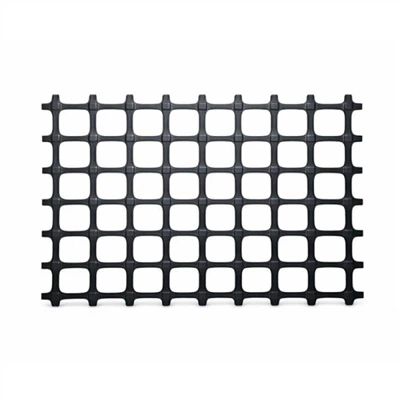
Uniaxial geogrids are high-strength polymer materials with a grid-like structure. They are designed to provide reinforcement in one direction, typically the direction of maximum stress. The grid structure allows the geogrid to interlock with the surrounding soil, distributing loads and increasing the overall stability of the slope.
There are different types of uniaxial geogrids available, including Polyester Uniaxial Geogrid, Uniaxial Geogrids For Soil Reinforcement, and Hdpe Uniaxial Geogrid. Each type has its own unique properties and advantages, making them suitable for different applications and soil conditions.
Mechanisms of Slope Stabilization
The use of uniaxial geogrids in slope stabilization is based on several key mechanisms:
1. Reinforcement and Load Distribution
When a uniaxial geogrid is installed in a slope, it acts as a reinforcement layer. The geogrid's high tensile strength allows it to resist the forces acting on the slope, such as gravitational forces and lateral earth pressures. By distributing these forces over a larger area, the geogrid reduces the stress concentration at critical points in the slope, preventing the development of shear failures.
2. Soil Interaction
The grid structure of the uniaxial geogrid provides a large surface area for interaction with the surrounding soil. As the soil fills the openings in the grid, it forms a composite material that is stronger and more stable than the soil alone. This interaction helps to increase the shear strength of the soil and improve its resistance to deformation.
3. Erosion Control
Uniaxial geogrids can also play a crucial role in erosion control. By stabilizing the slope, they prevent soil erosion caused by water runoff and wind. The geogrid acts as a protective layer, reducing the impact of erosive forces and helping to maintain the integrity of the slope.
Benefits of Using Uniaxial Geogrids in Slope Stabilization
The use of uniaxial geogrids offers several benefits in slope stabilization:
1. Improved Stability
The primary benefit of using uniaxial geogrids is the significant improvement in slope stability. By reinforcing the soil and distributing loads, the geogrid reduces the risk of slope failure and landslides. This is particularly important in areas with steep slopes or poor soil conditions.
2. Cost-Effectiveness
Compared to traditional slope stabilization methods, such as retaining walls or soil nailing, the use of uniaxial geogrids is often more cost-effective. Geogrids are relatively inexpensive to purchase and install, and they require less excavation and construction time. This can result in significant cost savings for engineering projects.
3. Environmental Friendliness
Uniaxial geogrids are made from recyclable materials, making them an environmentally friendly choice for slope stabilization. They also have a low carbon footprint compared to other construction materials, such as concrete or steel.
4. Flexibility and Adaptability
Uniaxial geogrids can be easily customized to fit the specific requirements of a slope stabilization project. They can be cut to size and installed in a variety of configurations, making them suitable for different slope geometries and soil conditions.
Case Studies
To illustrate the effectiveness of uniaxial geogrids in slope stabilization, let's look at a few case studies:
Case Study 1: Road Embankment Stabilization
In a road construction project, a steep embankment was at risk of failure due to poor soil conditions and heavy traffic loads. To stabilize the embankment, uniaxial geogrids were installed at regular intervals within the soil. The geogrids provided reinforcement and distributed the loads, preventing the development of shear failures. As a result, the embankment remained stable, and the road was able to withstand the traffic loads without any signs of damage.
Case Study 2: Retaining Wall Reinforcement
In a retaining wall project, uniaxial geogrids were used to reinforce the soil behind the wall. The geogrids were installed horizontally within the soil, creating a composite structure that increased the stability of the wall. The use of geogrids reduced the lateral earth pressures on the wall, preventing it from overturning or collapsing.
Installation and Design Considerations
Proper installation and design are crucial for the effective use of uniaxial geogrids in slope stabilization. Here are some key considerations:
1. Site Investigation
Before installing uniaxial geogrids, a thorough site investigation should be conducted to assess the soil conditions, slope geometry, and potential failure mechanisms. This information is essential for determining the appropriate type and configuration of geogrids to use.
2. Geogrid Selection
The selection of the appropriate uniaxial geogrid depends on several factors, including the soil type, slope angle, and design loads. Different types of geogrids have different properties and strengths, so it is important to choose the one that is best suited for the specific project requirements.
3. Installation Techniques
Uniaxial geogrids should be installed according to the manufacturer's instructions. This typically involves excavating the slope to the required depth, placing the geogrid on the prepared surface, and securing it in place using stakes or other fastening methods. The geogrid should be overlapped at the joints to ensure continuity and proper load transfer.
4. Monitoring and Maintenance
After installation, the slope should be monitored regularly to ensure its stability. Any signs of movement or distress should be addressed immediately to prevent further damage. Maintenance activities, such as vegetation management and erosion control, may also be required to maintain the long-term performance of the slope.


Conclusion
Uniaxial geogrids are a powerful tool for improving the stability of slopes. By providing reinforcement, distributing loads, and controlling erosion, they offer a cost-effective and environmentally friendly solution for slope stabilization. As a uniaxial geogrid supplier, I am committed to providing high-quality products and technical support to help our customers achieve their slope stabilization goals.
If you are interested in learning more about our uniaxial geogrids or discussing your slope stabilization project, please feel free to contact us. We would be happy to assist you with your needs.
References
- [1] Koerner, R. M. (2012). Designing with Geosynthetics. Pearson Education.
- [2] Bonaparte, R., & Christopher, B. R. (1994). Geosynthetics in Geotechnical Engineering. ASCE Press.
- [3] ASTM D6637/D6637M - 18. Standard Specification for Uniaxial Polypropylene Geogrids for Reinforcement of Soil. ASTM International.